When Cute Turns Creepy: The Weird Psychology Behind Kawaii That Makes Your Skin Crawl
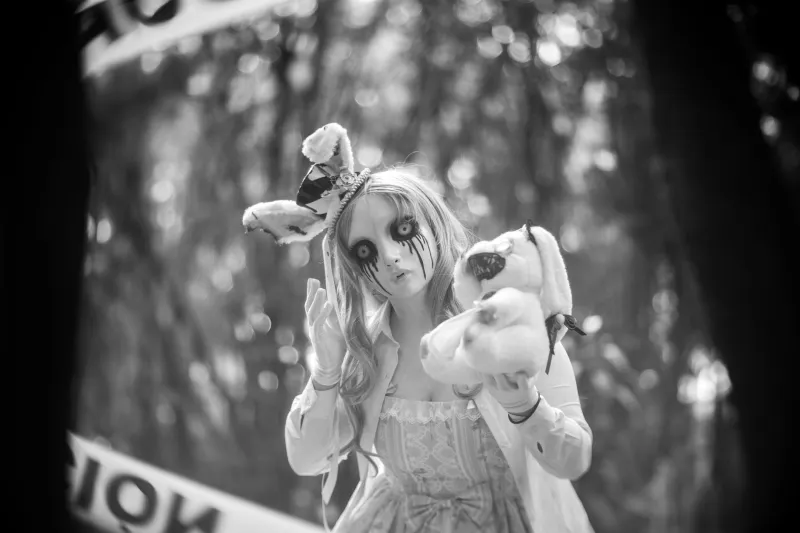
You've been there. You're scrolling through a kawaii shop, vibing with the plushies and the pastel everything, and then — bam. Something stops you cold. It looks like it should be cute. It has the round face, the tiny nose, the enormous glassy eyes. But instead of going "awww," you go "...nope." You close the tab. You maybe shudder a little.
Welcome to the cuteness uncanny valley. It's real, it's weird, and honestly? It says a lot about how our brains process what "cute" even means.
What Is the Uncanny Valley, Anyway?
Most people know the uncanny valley as a robotics concept — the idea that the closer a robot looks to a human without fully being human, the more unsettling it becomes. Coined by Japanese roboticist Masahiro Mori back in 1970, the theory describes that dip in comfort we feel when something is almost right but not quite.
The thing is, the uncanny valley isn't exclusive to humanoid robots. It applies to character design, too — and kawaii aesthetics, with their highly stylized proportions, are surprisingly vulnerable to falling into it.
"Our brains are constantly running pattern-recognition software," explains developmental psychologist concept. "When we see something that mimics the features we associate with infants — big eyes, round heads, small noses — we get a warmth response. But if those features are exaggerated past a certain threshold, or combined in ways that feel biologically 'off,' that warmth flips into alarm."
In other words: there's a sweet spot for cute. And some designs rocket right past it.
The Eyes Have It (And Sometimes That's the Problem)
Oversized eyes are basically the cornerstone of kawaii design. Think Sanrio, think anime chibi characters, think every plushie that's ever made you want to squeeze it. Eyes that take up roughly a third of a character's face signal youth and vulnerability — two things our brains are hardwired to respond to with protectiveness and affection.
But push those eyes further — make them glassy, reflective, or weirdly static — and something shifts. The character stops looking young and starts looking hollow. Empty eyes that don't track, don't blink, and don't carry any readable emotion register as "wrong" on a pretty primal level. It's the difference between a Squishmallow and a vintage porcelain doll, and you already know which one shows up in horror movies.
Character designers who work in the kawaii space talk about this constantly. The goal is always to suggest life — a tiny highlight dot in the pupil, a slight asymmetry, an implied direction of gaze. Remove those signals and you've got something that looks cute on a checklist but feels dead in practice.
Proportion Play and Where It Goes Wrong
Kawaii design lives and dies by proportion. Tiny limbs, massive heads, compressed bodies — these are all intentional distortions that signal "baby" and "harmless" to our visual cortex. It works brilliantly when it's executed with confidence.
The problem shows up in the in-between spaces. A character that's mostly kawaii but has hands drawn in realistic proportion. A mascot with a stylized face but a body that moves in an uncannily human way. A plushie with soft, rounded features except for a mouth that's just slightly too wide, or teeth that are just slightly too detailed.
These mismatches create cognitive dissonance. Your brain starts a sentence — "this is a cute, safe, simple thing" — and then trips over a detail that doesn't belong. The mismatch doesn't just confuse the cute response; it actively triggers suspicion. What is this thing trying to hide?
The Mascot Problem
Brand mascots are a particularly rich territory for accidental creepiness. Marketing teams often push designers to make mascots "more friendly" or "more approachable" through iterative rounds of feedback — and that process can slowly sand away the very quirks that made a design feel alive.
Or, going the other direction, a mascot gets designed to be maximally cute and ends up overcorrecting into something unsettling. Too symmetrical. Too smooth. Too relentlessly cheerful with an expression that never changes regardless of context.
There's a reason the internet has a deep and affectionate obsession with cataloging creepy mascots. Regional fast food characters, local sports team mascots, promotional characters from the '80s and '90s — the ones that haunt us are almost always the ones that tried hardest to be lovable and missed.
The Cultural Dimension
It's worth noting that "cute" isn't a universal constant. What reads as adorable in one cultural context can read as strange or even threatening in another. Japanese kawaii aesthetics, for example, have a long tradition of embracing a certain blankness — the expressionless face as a canvas for the viewer's own emotion. Characters like Gudetama or early Sanrio designs lean into that blankness deliberately.
For audiences not steeped in that visual language, that same blankness can feel eerie rather than inviting. It's not that the design is wrong — it's that the viewer's pattern-recognition software is running different assumptions.
This is part of why kawaii culture's global spread has been so fascinating to watch. As the aesthetic becomes more familiar worldwide, the threshold for what triggers the uncanny valley response shifts. What once felt weird starts to feel charming. The brain updates its database.
Leaning Into the Discomfort
Here's the twist: some designers are doing this on purpose. "Creepy cute" — or "spooky kawaii" if you want the aesthetic hashtag — is a whole genre that deliberately plays in the uncanny valley. Think plushies with too many eyes, pastel characters with unsettling grins, cute ghosts and monsters rendered in soft pink and lavender.
The appeal makes sense when you think about it. The discomfort of the uncanny valley is a form of stimulation — it gets your attention, it makes you feel something. When it's paired with an otherwise soft and kawaii aesthetic, the contrast becomes genuinely interesting. It's cute and unsettling, and that tension is the whole point.
Creators in this space talk about walking a very specific tightrope. Too far toward cute and you lose the edge. Too far toward creepy and you just have horror content. The magic lives in the middle — the thing that makes you smile and shudder at the same time.
So Why Does Any of This Matter?
Honestly? Because if you're someone who loves kawaii aesthetics, understanding why certain things trigger unease gives you a weirdly useful lens for appreciating the craft behind the things that don't. The designs that make you go "awww" without hesitation are doing a lot of subtle work — work that's easy to take for granted until you see what happens when it goes sideways.
And if you happen to be someone who makes things — designs characters, sews plushies, creates mascots — knowing where the uncanny valley lives is basically your cheat code for avoiding it. Or, if you're feeling adventurous, finding it on purpose.
Either way, the next time something that should be cute makes the hair on your arms stand up, you can at least nod knowingly. Your brain isn't broken. It's just very, very picky about its proportions.