When the Aesthetic Stops Being Fun: Surviving Cute Burnout

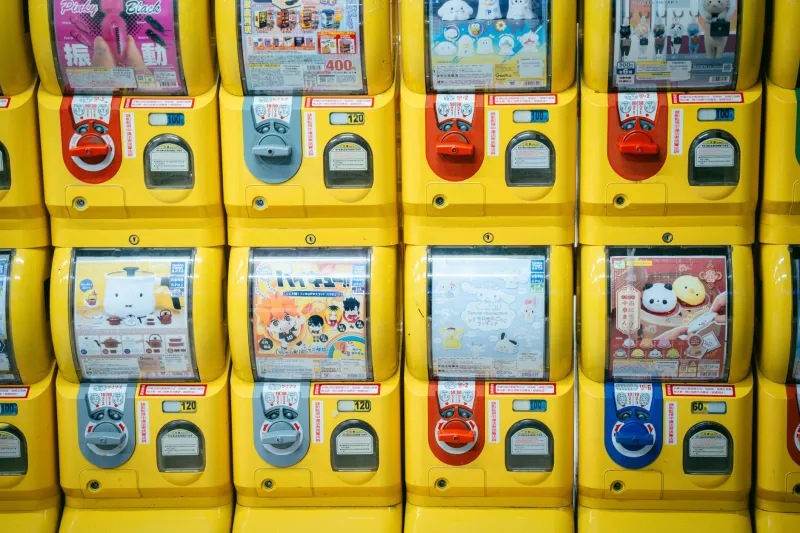
Photo: Nenad Stojkovic, CC BY 2.0, via Wikimedia Commons
There's a moment a lot of us have experienced but rarely talk about out loud. You're standing in a store surrounded by the most objectively adorable things — little ceramic mushrooms, a pastel planner with gold foil detailing, a plushie that is, genuinely, perfect. And instead of feeling that familiar rush of delight, you feel... tired. Vaguely stressed. Maybe a little guilty about the credit card you're already holding.
That feeling has a name. It's cute burnout, and it's more common than the aesthetic internet would have you believe.
What Cute Burnout Actually Feels Like
Cute burnout isn't just being bored with your stuff. It's a specific kind of fatigue that builds up when the thing that was supposed to bring you joy starts generating anxiety instead.
It can show up as decision fatigue — standing in front of your wardrobe for twenty minutes trying to assemble an outfit that feels "on aesthetic" and ending up frustrated instead of put-together. It shows up as the compulsive need to photograph your breakfast, your desk setup, your new purchase before you've even had a chance to enjoy any of it. It shows up as the sinking feeling when you scroll your own feed and think this doesn't even look like my real life.
Kelsie, 22, a nursing student in Nashville, describes it this way: "I spent so much time and money building what I thought was my dream room — all the fairy lights, the matching organization stuff, the gallery wall. And then I'd sit in it and feel weirdly hollow. Like I'd finished a game and didn't know what to do next."
This experience is not a personality flaw. It's the entirely predictable result of treating an aesthetic like a destination rather than a practice.
The Spending Spiral Is Real
Let's be honest about the financial dimension, because it's a big one. Kawaii culture is, among other things, a market. There are entire industries — stationery, plushies, skincare, fashion, home décor — that are very good at making their products feel essential to a certain kind of life. The haul video format, the "new in my collection" posts, the limited-edition drops that create artificial urgency — these are mechanisms designed to keep you spending.
None of that is a secret, and none of it makes the people who participate in it bad or naive. But it does mean that if you're not actively paying attention, your cute hobby can quietly become a cute debt problem.
A 2023 survey by Bankrate found that nearly 40% of Americans with credit card debt cited impulse purchases as a contributing factor. Aesthetic-driven impulse buying — the "it's only $12 and it's so cute" logic applied seventeen times a month — is a real pattern worth examining without shame.
The Performance Pressure
Social media has done something interesting and slightly terrible to personal aesthetics: it's turned them into content. Which means that for a lot of people, enjoying something cute is now inseparable from documenting it, posting it, and monitoring how it performs.
This creates a loop where your real, lived experience of your aesthetic is constantly being filtered through the question of how will this look? You stop buying things because you love them and start buying them because they'll photograph well. You rearrange your actual living space not for your own comfort but for the shot.
And then you wonder why being in your own room feels vaguely performative.
Tori, 20, a community college student in Phoenix, quit posting her room setups for three months after realizing she was redecorating specifically to have new content. "I'd move things around for a photo and then move them back to where they actually worked," she says. "My room was never actually for me. It was for my followers. That was a weird thing to realize."
How to Recalibrate Without Abandoning Everything You Love
The answer to cute burnout is not to throw away your plushies and go full minimalist. The aesthetic is yours — it's worth protecting. What needs to change is the relationship you have with it.
Spend time with your stuff before you buy more. This sounds obvious, but the haul culture of social media normalizes constant acquisition. Try a month where you don't buy anything new and just use what you have. You'll probably rediscover things you forgot you owned.
Uncouple enjoyment from documentation. Eat the cute snack without photographing it. Light the candle and just sit with it. Buy the sticker and put it somewhere private. Practice having aesthetic experiences that are entirely for you.
Do a vibe audit, not a purge. Instead of dramatically decluttering, ask yourself what in your space or wardrobe you genuinely love versus what you kept because it was expensive or because it "fits the aesthetic." The things you actually love are the ones you reach for without thinking.
Set a soft budget and stick to it. Not as punishment, but as protection. Knowing you have a set amount for cute stuff each month removes the anxiety of every individual purchase. It also forces you to be more intentional, which usually means you end up with things you actually love instead of things that just seemed cute in the moment.
Talk about it. The aesthetic internet is very good at presenting aspirational content and not great at talking about the fatigue that comes with it. But those conversations are happening — in comment sections, in Discord servers, in group chats. Find them. You'll feel less alone.
Cute Is Still Worth It
Burnout doesn't mean the aesthetic was wrong for you. It usually means you need to return to why you fell in love with it in the first place — the small moments of joy, the comfort of surrounding yourself with things that reflect who you are, the community of people who get it.
The goal was never a perfectly curated feed. It was a life that felt, in some genuine way, delightful. That's still achievable. It just requires a little more honesty about what's working and a little less pressure to make it look perfect.
Your aesthetic should feel like coming home. If it's started to feel like a job, it's time to clock out for a minute — and come back on your own terms.